
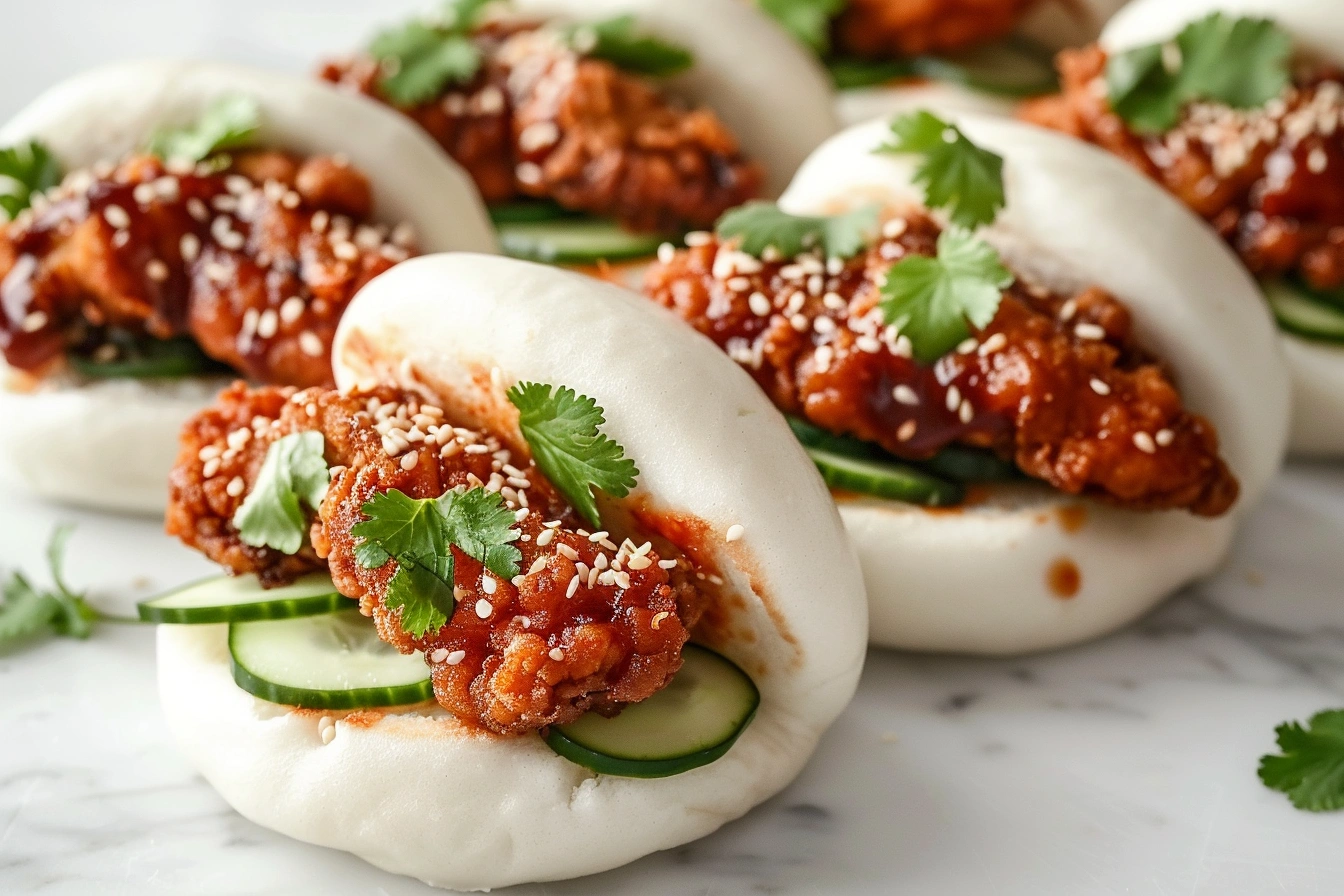
Imagine biting through a cloud-soft bun into the most incredible crunch. Juicy fried chicken bursts with flavor as the spicy-sweet gochujang glaze hits your taste buds. Cool cucumber slices provide contrast, while fresh cilantro ties everything together beautifully.
This is Korean fried chicken bao at its finest.
We’re combining ultra-crispy Korean fried chicken with pillowy steamed bao buns in this recipe. Using a double-frying method gives you an amazingly crunchy coating while the meat stays tender and juicy. The gochujang glaze delivers authentic Korean flavor – simultaneously spicy, sweet, and savory. Nestled in soft bao with tangy pickles and herbs, every element works together to create an unforgettable taste experience.
Making bao buns from scratch might seem challenging, but I promise it’s easier than you think. Each step is straightforward and beginner-friendly. Perfect for weekend meals or special occasions, this recipe helps you create professional-quality food at home.
What I love most about this Korean chicken bao recipe is how adaptable it is. Prepare everything in advance and assemble when ready, or cook it all fresh in one session. However you approach it, the results will look stunning and taste incredible.
Why This Korean Fried Chicken Bao Recipe Works
Restaurant-Quality Results at Home
This recipe needs no fancy equipment or professional skills. Everything is simple and designed for everyday kitchens. Master these chicken bao buns once, and you’ll save serious money while wowing your friends and family.
Perfect Texture Combination
Contrasting textures make every bite interesting. Here you’ll experience ultra-crispy coating over succulent chicken, all cradled in fluffy steamed bao. Multiple textures play together – crunchy exterior, moist chicken, pillowy buns, and crisp, refreshing cucumbers.
Balanced Flavors
Korean cooking masters the art of flavor balance across sweet, spicy, salty, and savory notes. This gochujang glaze achieves that perfectly. Gochujang is a Korean fermented chili paste offering complex depth beyond what ordinary hot sauce provides. Combined with bright pickled cucumbers and fresh cilantro, every flavor gets its moment without overwhelming the others.
Make-Ahead Friendly
Short on time? Prepare bao buns days in advance and simply reheat before serving. Let chicken marinate while you sleep. Create pickled cucumbers several days early. These flexible options let you enjoy restaurant-worthy Korean fried chicken bao any night of the week.
Impressive Presentation
The visual appeal of these fried chicken bao buns matches their incredible taste. Golden-brown chicken contrasts beautifully against pristine white buns, while green herbs and toasted sesame seeds add color. It’s Instagram-worthy food that elevates any meal into something memorable.
What You’ll Need for Korean Fried Chicken Bao
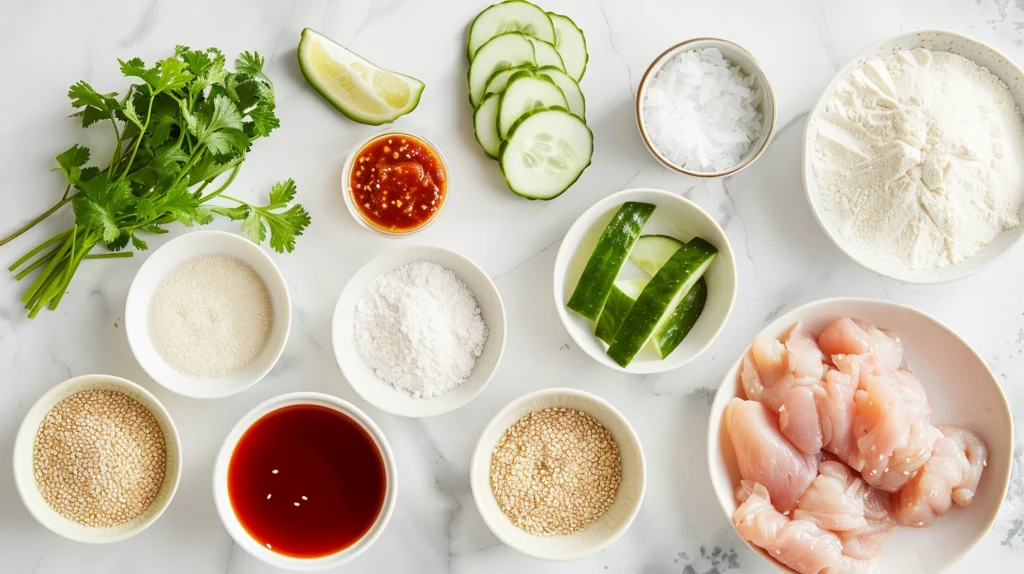
For the Fluffy Steamed Bao Buns
- 2 cups all-purpose flour, with additional for dusting
- 1 tablespoon sugar
- 1 teaspoon instant yeast
- ½ teaspoon baking powder
- ¼ teaspoon salt
- ⅔ cup warm water
- 1 tablespoon neutral oil
- 8 small squares of baking paper
For the Crispy Korean Fried Chicken
- 1 pound boneless skinless chicken thighs, chopped into bite-sized chunks
- 1 cup buttermilk
- 1 cup all-purpose flour
- ½ cup cornstarch
- 2 teaspoons garlic powder
- 1 teaspoon salt
- ½ teaspoon black pepper
- Neutral oil for deep frying (about 4 cups)
For the Sweet and Spicy Gochujang Glaze
- 3 tablespoons gochujang
- 2 tablespoons honey
- 1 tablespoon soy sauce
- 1 tablespoon rice vinegar
- 1 teaspoon sesame oil
- 1 clove garlic, minced
- 2 tablespoons water
For the Quick Pickled Cucumbers
- 1 fresh cucumber, thinly sliced
- 2 tablespoons rice vinegar
- 1 tablespoon sugar
- ½ teaspoon salt
For Garnish
- 2 tablespoons sesame seeds
- Fresh cilantro leaves
- Sliced green onions (optional)
Step-by-Step Guide to Perfect Korean Fried Chicken Bao
Prepare the Pickled Cucumbers
Begin with pickled cucumbers – they need time to absorb the flavors. Slice your fresh cucumber paper-thin for best results. In a bowl, whisk together rice vinegar, sugar, and salt until the sugar completely dissolves. Add cucumber slices, toss everything to coat evenly, then cover and chill for a minimum of 1 hour.
Make the Bao Bun Dough
In a large mixing bowl, whisk together flour, sugar, instant yeast, baking powder, and salt. Make a well in the middle, then add warm water and neutral oil. Mix until you have a rough, shaggy dough, then transfer to a floured work surface. Knead for 8-10 minutes until the dough becomes smooth and springs back when poked. Transfer to an oiled bowl, cover with a damp kitchen towel, and allow to rise for 1 hour until it doubles.
Shape and Steam the Bao Buns
Deflate the risen dough by punching it down, then portion into 8 equal pieces. Shape each piece into a smooth ball, then flatten with a rolling pin into a 4-inch oval. Lightly brush the surface with oil before folding in half to create a taco shape. Set each folded bun on a paper square, cover, and rest for 30 minutes.
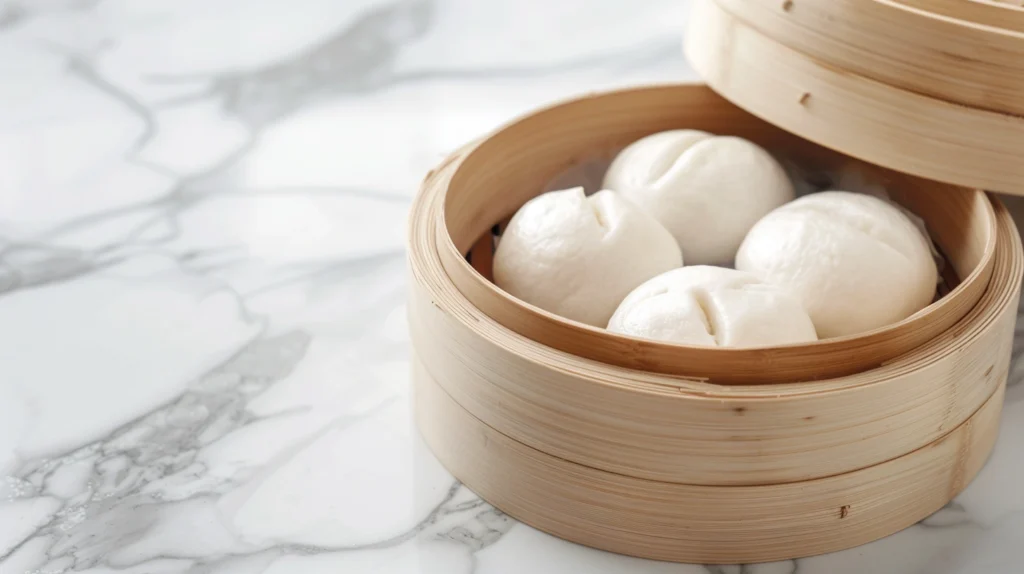
Prepare your steamer by filling it with water and heating to a gentle simmer. Arrange bao buns inside with space between them. Steam for 12-15 minutes until they’re puffy and cooked through. Switch off the heat and wait 2 minutes before lifting the lid. Keep buns warm by wrapping them in a clean towel.
Marinate and Coat the Chicken
Chop chicken thighs into evenly-sized chunks. Submerge in buttermilk, cover the bowl, and refrigerate for a minimum of 1 hour.
In a shallow bowl, whisk together flour, cornstarch, garlic powder, salt, and pepper. Pull chicken from the buttermilk, allowing excess to drip away. Press each piece into the flour mixture for thorough coating, then shake off any excess.
Make the Gochujang Glaze
In a small pot, whisk together gochujang, honey, soy sauce, rice vinegar, sesame oil, garlic, and water. Place over medium heat and stir until smooth. Let it bubble gently and cook for 3-4 minutes until the mixture thickens slightly. Remove from heat and set aside.
Fry the Chicken
Heat oil in a deep pot to 350°F. Carefully add chicken pieces in batches – don’t overcrowd. Fry for 6-8 minutes, turning occasionally, until golden brown and cooked through. Remove and drain on a wire rack.
Here’s the secret: fry twice. After all pieces are fried once, let them rest 5 minutes. Bring oil back to 350°F and fry everything again for 2-3 minutes. This double-frying creates that legendary Korean fried chicken crispiness.
Glaze and Assemble
Place the hot fried chicken in a large bowl. Drizzle the warm gochujang glaze over the crispy korean chicken and gently toss until every piece is evenly coated. Sprinkle with sesame seeds immediately.
Gently open each warm bao bun. Add 2-3 pieces of glazed fried chicken, a generous portion of pickled cucumbers, and fresh cilantro. Serve immediately while the chicken is crispy and buns are warm.
Master Your Korean Chicken Bao
For the Crispiest Chicken
Temperature control is everything. Keep oil at a steady 350°F using a thermometer. The double-frying technique isn’t optional – first fry cooks the chicken through, rest lets moisture escape, second fry creates maximum crunch.
Bao Bun Success
Steam at a gentle simmer, not a rolling boil. Line your steamer with baking paper to prevent sticking. Dense buns usually mean expired yeast or excessively hot water killed the yeast during mixing. Use warm water around 100-110°F.
Make-Ahead Strategies
Steam bao buns up to 2 days ahead and store in the refrigerator. Reheat by steaming 2-3 minutes. Pickled cucumbers improve with time – make them 2-3 days in advance. Marinate chicken overnight for maximum tenderness.
Flavor Variations
Not a fan of spice? Use a honey-soy glaze instead. Want more vegetables? Add shredded carrots, radishes, or kimchi. Try mint or Thai basil instead of cilantro for different flavors.
Equipment Alternatives
No steamer? Place a metal colander in a large pot with a lid. No deep fryer? A heavy-bottomed Dutch oven works perfectly. Can’t find gochujang? Check an Asian grocer or order online – it’s worth it for authentic flavor.
Storage and Reheating
Leftover fried chicken stays crispy for 2 days when stored in a container with paper towels. Reheat in a 375°F oven for 8-10 minutes. The oven restores crispiness better than a microwave.
How to Enjoy Your Korean Fried Chicken Bao
As a Main Course
Serve with simple cucumber salad, steamed bok choy, Korean-style coleslaw, or kimchi. A light miso soup balances the richness perfectly.
For Parties
Set up a bao bar where guests build their own. Lay out warm bao, fried chicken, pickled cucumbers, and various toppings like shredded lettuce, jalapeños, spicy mayo, and lime wedges.
Presentation Tips
Serve on a wooden board or bamboo steamer basket for authentic appeal. Right before serving, sprinkle extra sesame seeds and drizzle more gochujang glaze for visual impact.
Your Journey to Perfect Korean Fried Chicken Bao
You’ve just learned how to make Korean fried chicken bao that rivals any restaurant version. The combination of crispy, juicy chicken with fluffy steamed buns and tangy pickles creates something truly special.
What makes this recipe work is attention to technique – the double-frying for crispiest coating, proper steaming for pillowy buns, and balanced gochujang glaze bringing everything together. Don’t be intimidated by the multiple components. Each step is manageable, and you can tackle them on separate days if that works better for your schedule.
Once you master this Korean chicken bao recipe, you can adapt flavors to your liking. Experiment with different glazes, try various toppings, adjust spice levels. These chicken bao buns bring joy to every table – fun to make, beautiful to look at, and absolutely delicious to eat.
FAQs
What is Korean bao made of?
Korean bao buns are made from flour, yeast, sugar, baking powder, and water. The dough is kneaded until smooth, allowed to rise, shaped into the signature folded bun, and steamed until fluffy. The steaming method creates their characteristic soft, cloud-like texture and white color.
What is Korean fried chicken bao?
Korean fried chicken bao features ultra-crispy Korean-style fried chicken with its signature double-fried coating, served in pillowy steamed bao buns. The chicken gets coated in a sweet-spicy gochujang glaze and paired with pickled vegetables and fresh herbs.
What is a chicken bao?
A chicken bao consists of a steamed bun filled with chicken and various accompaniments. The bun achieves its soft, pillowy texture through steaming instead of baking. Vegetables, herbs, and savory sauces typically join the chicken inside each bun.
What exactly is bánh bao made of?
Bánh bao (Vietnamese steamed buns) are made from yeasted dough with flour, yeast, sugar, baking powder, and sometimes milk. The filling traditionally includes ground pork, hard-boiled egg, Chinese sausage, and mushrooms. The buns are steamed until puffy and white.
Are chicken baos healthy?
Chicken baos can be part of a balanced diet. Steamed buns are relatively low in fat. Lean chicken delivers quality protein while vegetables contribute fiber and nutrients. The fried version contains more calories, but modifications help – baking the chicken, switching to whole wheat flour, and increasing vegetable content all create healthier versions.
What is so special about Korean fried chicken?
Korean fried chicken earns its reputation through an extraordinarily crispy coating created by frying twice. First, the chicken cooks through completely. After resting, it gets fried again for exceptional crunchiness. Cornstarch in the breading creates an airier, crispier texture, while glazes like gochujang add that signature sweet-spicy finish.
Is bao good for weight loss?
Bao can fit into a weight loss plan when eaten mindfully. Steamed bao buns contain fewer calories than fried alternatives, typically 100-150 calories per bun. Select lean proteins, increase vegetable portions, and monitor serving sizes to create a balanced meal.
What is the healthiest Chinese food to order?
Steamed dishes are generally healthiest – steamed bao, steamed dumplings, steamed vegetables with lean protein. Stir-fried vegetables with chicken or tofu, hot and sour soup, and Buddha’s Delight are good options. Avoid heavy sauces and deep-fried items.
How do you eat chicken bao?
Hold the bao with both hands, supporting the bottom. Start by biting from the side instead of straight down the center – this helps keep all the filling inside. Use a small plate underneath to catch any escaping ingredients. Eat in several bites, savoring the flavors and textures.